
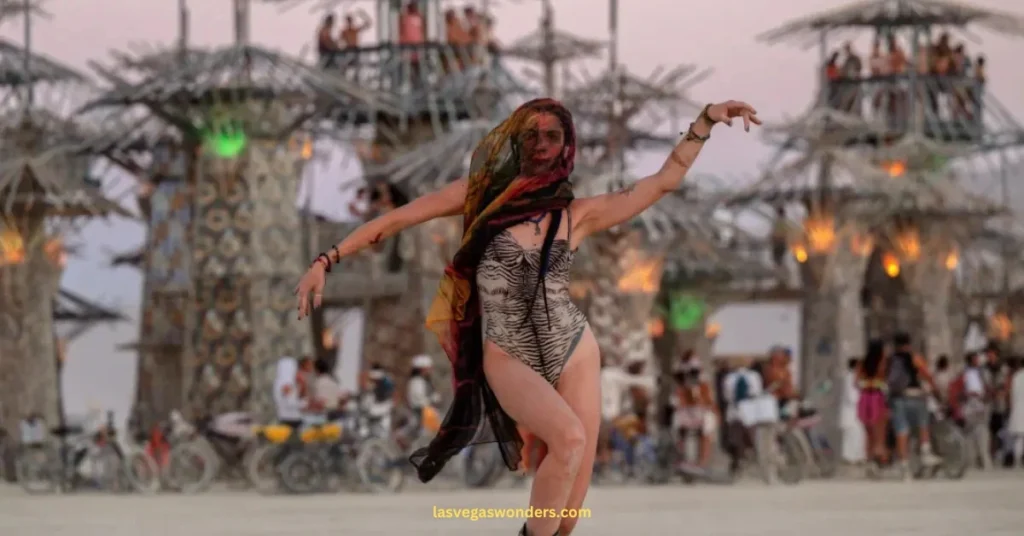
Key Highlights:
- Daytime temperatures regularly exceed 100°F. Nights drop into the 40s and sometimes 30s. Both happen in the same 24-hour period
- Dust storms with gusts up to 75 mph can reduce visibility to zero in seconds. Sealed goggles and N95 respirators are not optional
- Rain is rare but transforms the playa into impassable mud instantly. No vehicles, no bikes, shelter in place
- Non-negotiable gear: 18 to 24-inch rebar stakes, airtight goggles, N95 respirators, vinegar foot wash, insulated outerwear for nights
Black Rock Desert Weather: Quick Reference
| Condition | Typical Range | What to Do |
|---|---|---|
| Daytime temperatures | 95°F to 105°F+ | Light breathable clothing, wide-brim hat, shade structure |
| Nighttime temperatures | 40°F to 50°F (occasional 30s) | Heavy coat, thermal layers, wool socks |
| Wind speeds | 15 to 30 mph sustained, gusts to 75 mph | 18 to 24-inch rebar, ratchet straps, no standard tent stakes |
| Dust composition | Alkaline gypsum and silica powder | Sealed goggles, N95 mask, vinegar foot soak nightly |
| Rain | Rare but sudden | Shelter in place, bags over boots, electronics in sealed bins |
Full Info: Burning Man Nevada 2026: Black Rock City Dates, Tickets & Costs
Temperatures: The Day-to-Night Swing
Black Rock City sits on an ancient dried lakebed at 3,900 feet elevation with no vegetation to block wind or shade you from the sun. Between 1:00 PM and 5:00 PM, temperatures routinely push past 100°F. The dry desert air accelerates dehydration faster than humid heat does — you can be severely dehydrated before you feel thirsty.
After the sun drops below the surrounding ridges, temperatures fall fast. A 40 to 50 degree drop in a few hours is normal. The tank top that was fine at 3:00 PM becomes a problem at midnight.
- Daytime: Loose, light-coloured cotton or linen, high-SPF sunscreen, UV-blocking eyewear. Seek shade between 11:00 AM and 5:00 PM when possible.
- Nighttime: Keep a heavy coat, beanie, and gloves attached to your bike at all times. You do not want to be across the city when the temperature drops.
- Sleeping: Standard tents become ovens by 7:30 AM. Pitch under a freestanding aluminet shade structure to deflect morning heat. Without one, you will be awake and sweating well before you want to be.
Dust Storms and Whiteouts
The playa dust is an ultra-fine alkaline powder. It gets into zippers, camera lenses, and lungs. When thermal drafts collide across the open basin, visibility can drop to zero in seconds. These whiteouts are not weather events you can outrun or predict reliably.
If a whiteout hits while you are away from camp:
Get off your bike immediately. Crashing into an art car, a guy-wire, or another person in zero visibility causes real injuries.
Put on sealed foam-lined goggles — ski or motocross style — and your N95 respirator. Sunglasses and bandanas do not block fine alkaline dust during a heavy storm.
Sit down with your back to the wind and wait. Most whiteouts pass within 15 to 30 minutes.
Playa foot is a chemical burn from prolonged alkaline dust contact with skin. Soak your feet each night in water with a splash of apple cider vinegar to restore your skin’s pH, then apply heavy moisturiser. Skip this routine and your feet will crack and bleed by day three.
Securing Your Camp Against Wind
Standard plastic tent stakes pull out of playa ground in sustained winds. When gusts hit 40 to 75 mph, unsecured canopies become airborne projectiles.
- Rebar: Drive 18 to 24-inch ribbed rebar or heavy lag screws deep into the lakebed for every tent corner, shade pole, and carport. This is not a suggestion for extreme conditions — it is the baseline requirement for any overnight structure.
- Cap your rebar: Exposed rebar tops cause serious puncture wounds in low-light conditions. Bend the top into a hook shape or cap with a tennis ball before anyone moves around your camp at night.
- Ratchet straps: Replace rope with heavy-duty ratchet straps for tarps and shade cloth. Rope loosens under constant vibration. Ratchet straps hold.
Rain: Rarer Than You Think, Worse Than You Expect
Rain events at Burning Man are infrequent but not unheard of. When rain hits the playa, the dried lakebed turns into thick, sticky clay within minutes. Bicycle wheels lock up. Vehicles sink and cannot move. Boots pull off your feet if you try to walk in it.
If rain starts:
Stop moving. The event organization closes the access gate and halts all vehicle movement to protect the terrain. Trying to drive or ride through playa mud gets you stuck and damages the surface for everyone else.
Put contractor garbage bags over your boots and secure them with duct tape if you need to reach the portable restrooms.
Keep electronics, dry clothing, and food elevated inside sealed plastic bins. Ground-level storage floods fast.
Wait. The closure lifts when the surface dries enough to handle traffic safely.
How Much Water to Bring
At minimum 1.5 to 2 gallons of potable water per person per day. That covers drinking, cooking, and basic hygiene. The dry heat pulls moisture out of you faster than you register it. Electrolytes matter as much as water volume — plain water does not replace what you lose in sustained heat.
Prepare for the Conditions, Not the Vacation
Burning Man weather in 2026 will follow the same pattern it always does: intense heat, dramatic cold, unpredictable dust, and occasional rain. None of it is unmanageable with the right preparation. All of it becomes a genuine problem without it.
Bring the rebar. Keep the goggles on your person. Have the heavy coat on your bike every single night regardless of how warm the afternoon felt. The desert does not adjust to your schedule.
Check the National Weather Service Reno Office for regional conditions before you leave and review the Official Burning Man Survival Guide for current preparation requirements. For regional permits and land use information, the Bureau of Land Management Black Rock Field Office is the official source.
FAQ
What are average temperatures during Burning Man?
Daytime highs between 95°F and 105°F. Nights consistently drop into the 40s, sometimes the high 30s. Both extremes happen in the same day throughout the event.
What goggles work for playa dust?
Fully sealed motocross or ski goggles with dense foam vents. The foam blocks microscopic particles that get through any non-sealed eyewear during a whiteout.
Can you drive on the playa if it rains?
No. The surface turns to thick clay that traps vehicles immediately. Event organizers halt all vehicle movement during rain events. Stay where you are.
How much water do I need per day?
1.5 to 2 gallons per person per day minimum, covering drinking, cooking, and basic hygiene. More if you are physically active during peak heat hours.
What is a playa foot, and how do I prevent it?
Chemical burns on the feet from prolonged alkaline dust contact. Soak feet nightly in water with a splash of apple cider vinegar, then apply heavy moisturizer. Start this routine on day one.
Keep Reading: