
Key Highlights:
- The Ultimate View: Secure seats in the center sections of the 200 or 300 levels (specifically Sections 206 and 306) for the perfect mathematical focal point of both the stage and the panoramic screen.
- The Overhang Danger Zone: Avoid rows 24 through 37 in the 100-level; the concrete mezzanine from the level above projects out directly over these seats, blocking the upper two-thirds of the LED screen.
- The Value Hack: Book a seat in the 400-level if you are attending a cinematic feature—you will save serious cash while enjoying a completely unobstructed, panoramic view of the entire ceiling dome.
- The Vertical Reality: Keep in mind that the 400-level sections rise at an exceptionally steep, dramatic incline, which can feel quite dizzying if you are prone to vertigo.
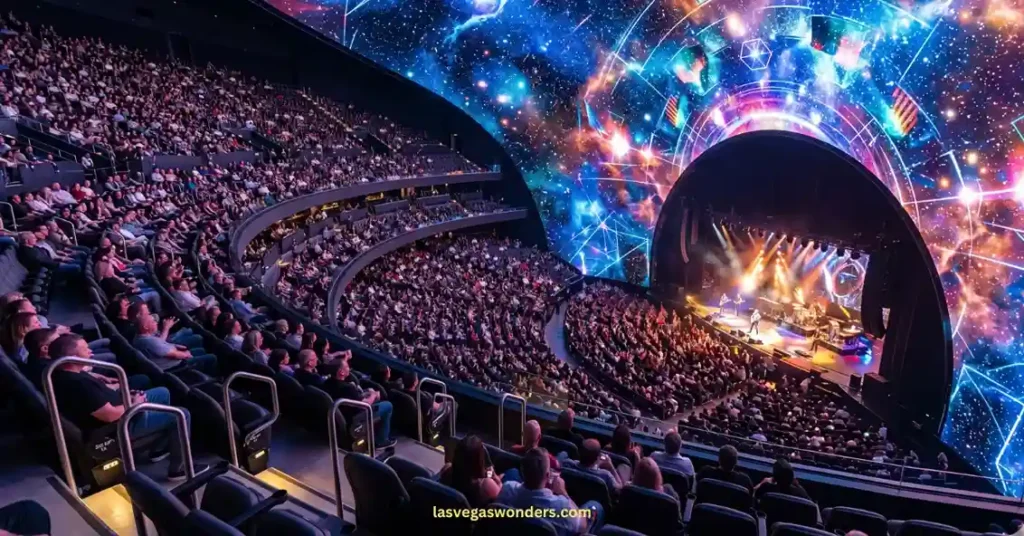
Walking into the main structural amphitheater of this record-breaking venue completely flips traditional arena design on its head. The space features a massive, 16K resolution LED screen that wraps up, over, and halfway around the audience, stretching across 160,000 square feet of high-definition digital real estate. Because the seats are arrayed in a towering, steep semi-circle facing a single proscenium stage, your distance from the floor and your vertical angle completely change how your brain processes the visual art.
The best way to read the venue layout is to understand that it does not function like a standard sports stadium where sitting closer to the floor is automatically better. Out of the 17,600 physical seats inside the bowl, roughly 10,000 are equipped with built-in haptic technology, allowing viewers to physically feel bass lines, rumbling earthquakes, or moving vehicle vibrations directly through their chairs. If you match the wrong section to your specific show type, you risk spending hundreds of dollars just to stare at a concrete ceiling or strain your neck looking straight up for two hours.
The Master Seating Level Breakdown: 100 to 400 Levels
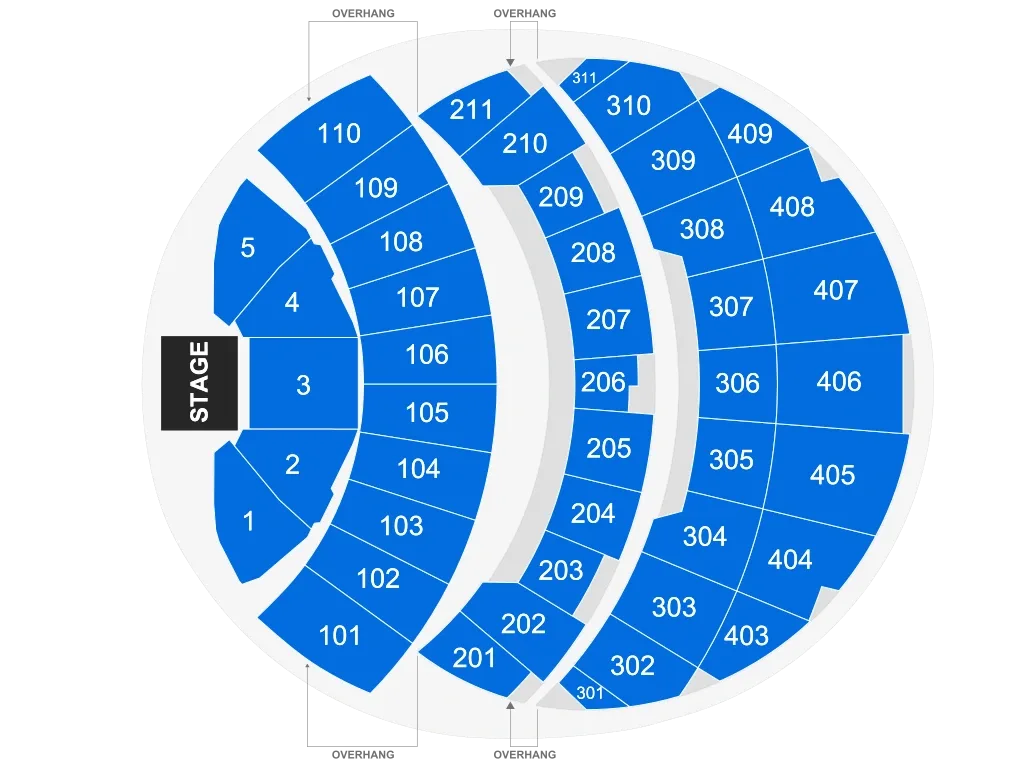
Finding your perfect vantage point means understanding the distinct pros, cons, and structural traps hidden within each individual seating deck. We have verified the active layout details to keep your ticket hunting completely flawless.
The 100-Level: Close Proximity with a Hidden Catch
The 100-level comprises Sections 101 through 110. For high-energy concert residencies, rows 12 through 23 put you incredibly close to the musicians, but sitting past row 24 slides you directly underneath the 200-level balcony overhang, completely chopping off your view of the upper dome screen.
The 200-Level: The Consensus “Best in the House”
Positioned right above the main floor, the 200-level represents the absolute sweet spot for live concert residencies. Sections 205, 206, and 207 give you a beautifully balanced, straight-on view of the physical stage performers while remaining completely clear of any structural obstructions.
The 300-Level: The Director’s Focal Point
For dedicated cinematic features like Postcard from Earth or The Wizard of Oz, the 300-level is the absolute gold standard. Section 306 sits at the precise mathematical center of the screen’s projection architecture, mimicking the exact point of view of the director’s camera lens.
The 400-Level: Panoramic Grandeur on a Budget
The 400-level is the highest and furthest deck from the main floor stage. While the distance means physical performers look like tiny dots, the panoramic perspective of the enveloping LED screen is arguably the best in the building for tech lovers who want deep immersion without a premium price tag.
Sphere Las Vegas: Seating Quick Reference Directory
To help you instantly cross-reference the ticket marketplace, this functional matrix matches every level to its specific view qualities, pricing tiers, and structural obstructions.
| Seating Level Deck | Key Structural Sections | View Quality Rating | Hidden Obstruction Risk | Haptic Seat Activation |
|---|---|---|---|---|
| GA Floor | Front Stage Standing Room | Excellent for Concerts | None (Must look straight up) | No Haptics (Standing Only) |
| 100-Level (Rows 12-23) | Sections 101 through 110 | Great Close-up Detail | None in these front rows | Yes (Select rows/sections) |
| 100-Level (Rows 24-37) | Sections 101 through 110 | Restrictive for Screen | Severe upper-screen block | Yes (Select rows/sections) |
| 200-Level (Center Deck) | Sections 205, 206, and 207 | Perfect Balance for Bands | None (100% Clear View) | Yes (Fully Active Tier) |
| 300-Level (Center Deck) | Sections 305, 306, and 307 | Elite Cinematic Focus | None (100% Clear View) | Yes (Fully Active Tier) |
| 400-Level (Upper Tier) | Sections 401 through 417 | Sweeping Panoramic Views | None (Extreme incline warning) | Yes (Fully Active Tier) |
Also Read: Best Sphere Shows Las Vegas (Top Events)
Insider Seating Tips: Bulletproof Rules for Buying Tickets
To make sure you don’t fall victim to tricky reseller descriptions or confusing seating maps, keep these highly actionable rules of thumb in mind:
- Avoid the Overhang for Movies: If your ticket booking portal displays a small warning icon or notes a “restricted view” past row 23 in the 100-level, believe it. It turns a revolutionary visual marvel into a basic, tunnel-vision cinema layout.
- Target the “6” Sections: If you want to sit perfectly head-on with the middle of the screen and stage, always hunt for sections ending in the number six—specifically 106, 206, 306, and 406.
- Skip the GA Floor for Immersive Movies: General Admission standing tickets are fantastic for high-octane rock bands, but they are a massive waste of cash for cinematic features. Standing on a flat floor means you have to crane your neck straight back toward the ceiling to catch the graphics.
- Take the Incline Seriously in the 400s: The steps in the upper deck are incredibly steep, narrow, and high. If you are traveling with elderly relatives or energetic toddlers, skip the upper tier completely and stay in the lower 200s or 300s for a safer walking layout.
Conclusion
Mastering your ticketing choices by utilizing a targeted approach to the best seats at the Sphere Las Vegas ensures a completely flawless, jaw-dropping leap into the future of live entertainment. By combining center-alignment strategies in sections like 206 or 306 with a strict avoidance of the 100-level overhang rows, you ensure that every dollar of your entertainment budget translates directly into an absolute visual masterpiece.
Our Final Helpful Tip: If you pull up a seating map on a secondary ticket exchange and spot an incredibly cheap ticket in the front rows of the 400-level (Rows 1 through 3), grab it instantly! These specific front rows of the upper tier completely bypass the steep walking climb of the higher stairs, put you right against the safety glass paneling, and give you a majestic, unobstructed panoramic look at the screen that feels exactly like flying inside a private theater cockpit!
❓ FAQ: Seating Chart Guide
Which 100-level rows are obstructed?
The concrete overhang from the level above begins affecting views starting precisely at row 24 and worsens progressively through row 37. Strictly book rows 12 through 23 to secure an unobstructed view.
Are all seats equipped with haptic features?
No. Out of the 17,600 seats inside the amphitheater, only 10,000 feature haptic vibrations. The standing GA floor and certain far-side sections do not feature vibration tech.
Is there accessible or ADA seating on all levels?
Yes. The venue features highly modern ADA-accessible configurations across all primary viewing tiers, with elevator access clusters running directly from the main entries and the Venetian pedestrian bridge.
Keep Reading:
- Can You See the Sphere for Free in Las Vegas?: Secret Spots
- How to Get to the Sphere Las Vegas (Monorail, Uber & Walking Guide)
- Where Should You Park at the Sphere Las Vegas? Prices & Tips
- Is the Sphere Las Vegas Worth It? Honest Visitor Review
- Sphere Las Vegas Ticket Prices – How Much Does It Cost?
- Where Is the Sphere in Las Vegas? Exact Location & Best Entrance