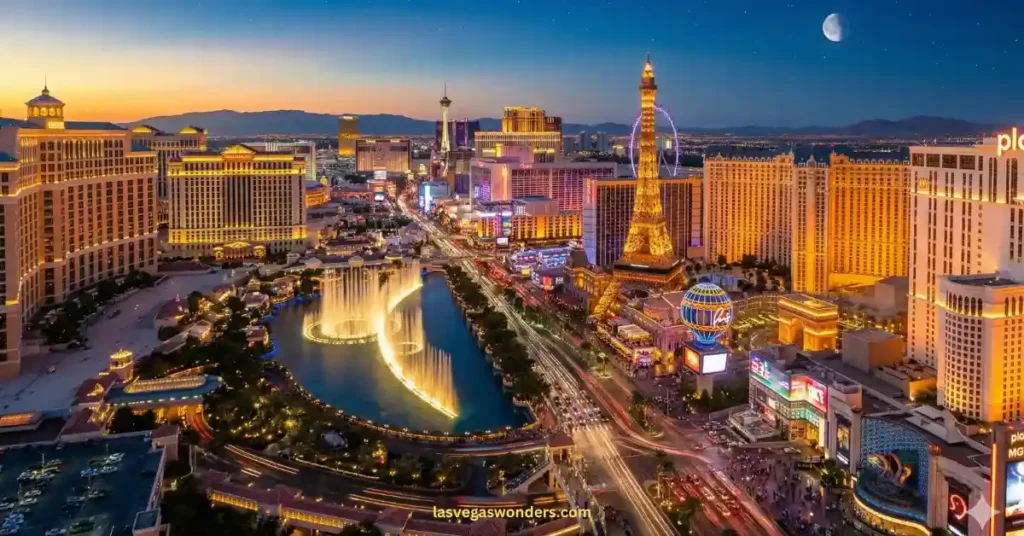
Key Highlights:
- The Length: It is exactly 4.2 miles (6.8 kms), running from Mandalay Bay in the south to The STRAT in the north.
- The Layout: Split into three hubs: the high-tech North, the walkable Center, and the stadium-heavy South.
- The Hotels: Approximately 30 to 45 major resorts line the boulevard, housing over 150,000 rooms.
- Pro Tip: Don’t try to walk it all in one day. Use the Vegas Loop (Tesla tunnels) or free trams to save your feet.
If you’re looking at a map of Nevada and see a tiny, neon-drenched vein pulsing in the middle of the desert, you’ve found it. The Las Vegas Strip is the undisputed heavyweight champion of tourism, a four-mile stretch of pavement that packs in more Eiffel Towers, Egyptian pyramids, and dancing fountains than the rest of the world combined.
We have navigated the “pedestrian gaps” and mid-summer heatwaves of this boulevard more times than we can count. For a first-timer, the Strip isn’t just a street; it’s a sensory marathon. It’s the kind of place where you can lose track of time, your budget, and occasionally your sense of direction before lunch. Here is our honest, friend-to-friend guide to tackling the Strip like a local.
How Long is the Las Vegas Strip?
When you see the Strip on a postcard, the buildings look like they are right next door. They aren’t; the official length remains 4.2 miles.
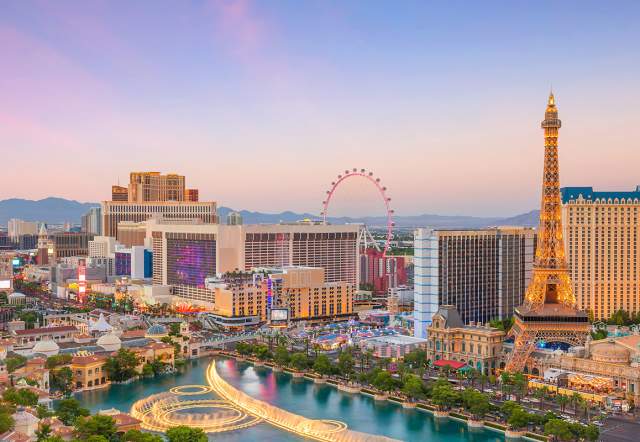
Direct Answer: The Las Vegas Strip officially runs along Las Vegas Boulevard South, stretching from Mandalay Bay at the southern end to The STRAT Hotel & Tower at the northern tip. While it’s technically located in the unincorporated towns of Paradise and Winchester, this 4.2-mile stretch serves as the heart of global entertainment.
Our Honest Take: Walking the entire Strip is a rite of passage, but a brutal one. Between multi-level pedestrian bridges and the desert sun, a “short stroll” to the next casino can easily take 30 minutes. We suggest breaking your exploration into sections rather than trying to conquer all four miles at once.
The Strip has effectively split into three distinct zones. Where you stay determines your entire logistical experience.
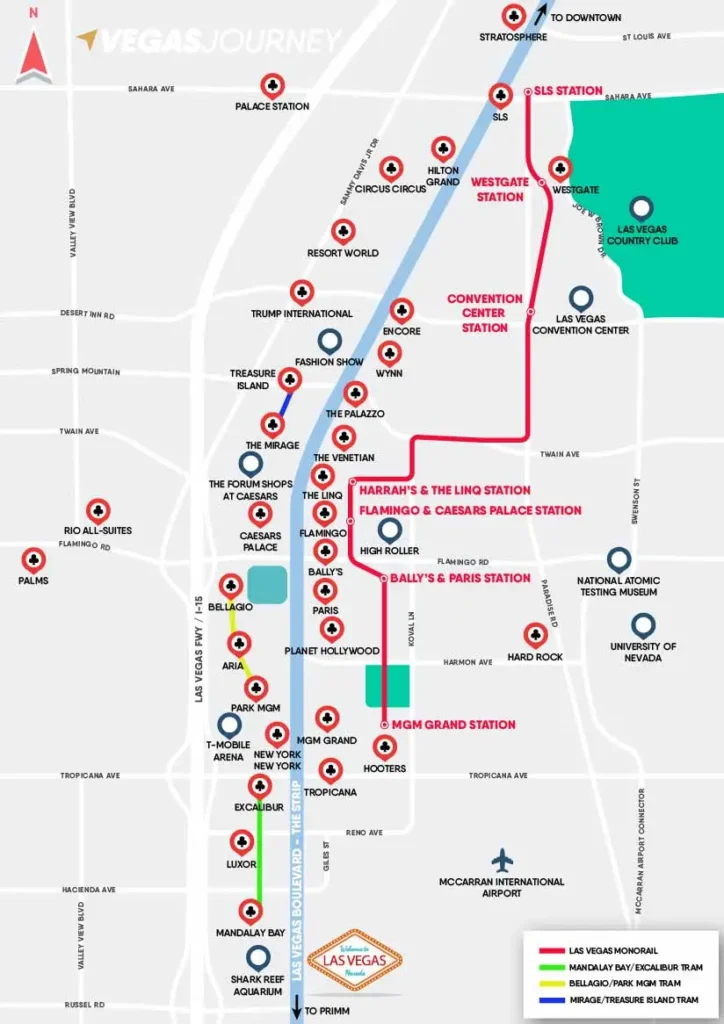
The North Strip (The “New Vegas” Hub)
This area runs from the Fashion Show Mall up to Sahara Avenue. It is home to the newest monoliths like Fontainebleau and Resorts World.
- Vibe: Sleek, quiet, and ultra-modern.
- Logistics: Pedestrian gaps are widest here. Use the Vegas Loop (Tesla tunnels) to connect quickly between Resorts World, Westgate, and the Convention Center.
The Center Strip (The “Main Character” Stretch)
The high-density core between Treasure Island and Planet Hollywood.
- Vibe: Classic postcards. This is where you find the Bellagio Fountains, Caesars Palace, and the Vanderpump Hotel (opening May 2026 at the former Cromwell site).
- Logistics: Highly walkable. You can hit ten major casinos in a 15-minute radius.
The South Strip (The “Stadium District”)
Anchored by Mandalay Bay and MGM Grand, this is the capital of sports and massive conventions.
- Vibe: High energy and interconnected.
- Logistics: A free tram connects Mandalay Bay, Luxor, and Excalibur, making it the most transit-friendly zone.
Also Read: Las Vegas Map Guide: The Strip, Downtown & Area Highlights
How Many Hotels are on the Las Vegas Strip?
Depending on your definition, there are about 30 to 45 hotels with “Strip” status, ranging from 6,000-room giants to boutique non-gaming towers.
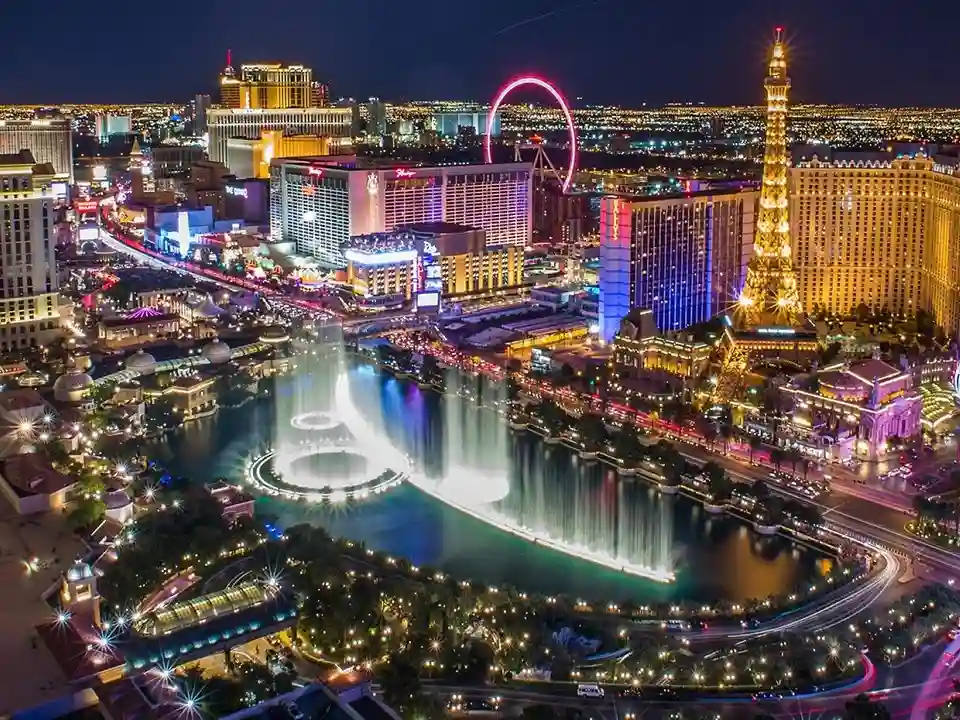
Direct Answer: The Las Vegas Strip features approximately 30 major casino-resorts and over a dozen non-gaming hotels. Iconic properties like The Venetian, Bellagio, and Caesars Palace define the skyline, contributing to a total capacity of over 150,000 guest rooms.
Top “Must-See” Hotels for First-Timers
- The Venetian: For the indoor canals and singing gondoliers.
- Caesars Palace: For Roman architecture and the massive Forum Shops.
- The Cosmopolitan: For the modern “cool” factor and the three-story Chandelier Bar.
- The Sphere: While an entertainment venue, its “Exosphere” (LED skin) is now the Strip’s most famous landmark.
Also Read: 14 Best Hotels On The Strip In Vegas
Mini Summary & Final Helpful Tip
The Las Vegas Strip is a 4.2-mile sensory overload designed for your entertainment. It houses some of the most famous hotels in the world and, as of 2026, is more high-tech than ever with the expansion of the Vegas Loop and The Sphere.
Our Final Helpful Tip: Before you start your walk, download an offline version of Google Maps. Inside massive mega-resorts, your GPS will often get “lost” or lose signal entirely. Having an offline map helps you find the right exit when you’re deep inside a 100,000-square-foot casino floor!
❓ FAQ: Las Vegas Strip Survival Guide
Is the “Welcome” sign on the Strip?
Technically, it’s about half a mile south of Mandalay Bay. We suggest a rideshare or the Deuce bus for that iconic photo; it’s a long, hot walk.
What are Resort Fees?
This is the “hidden tax.” Expect to pay $45 to $65 per night at luxury spots (Wynn, Bellagio, Fontainebleau) on top of your room rate. It is mandatory.
Can you drink on the sidewalk?
Yes, but no glass or cans. You must use plastic cups. If a cop sees you with glass, you’ll likely face a fine.
Is it safe at night?
Generally, yes. It is one of the most heavily policed areas in the U.S. Stick to the main pedestrian paths and use the bridges to cross the street.
Keep Reading: