
Key Highlights:
- Record Rainfall: Las Vegas recorded 1.08 inches of rain on October 11, breaking the previous October 11 record of 0.78 inches set in 2012.
- Storm System: The rain came from the remnants of Post-Tropical Cyclone Rachel.
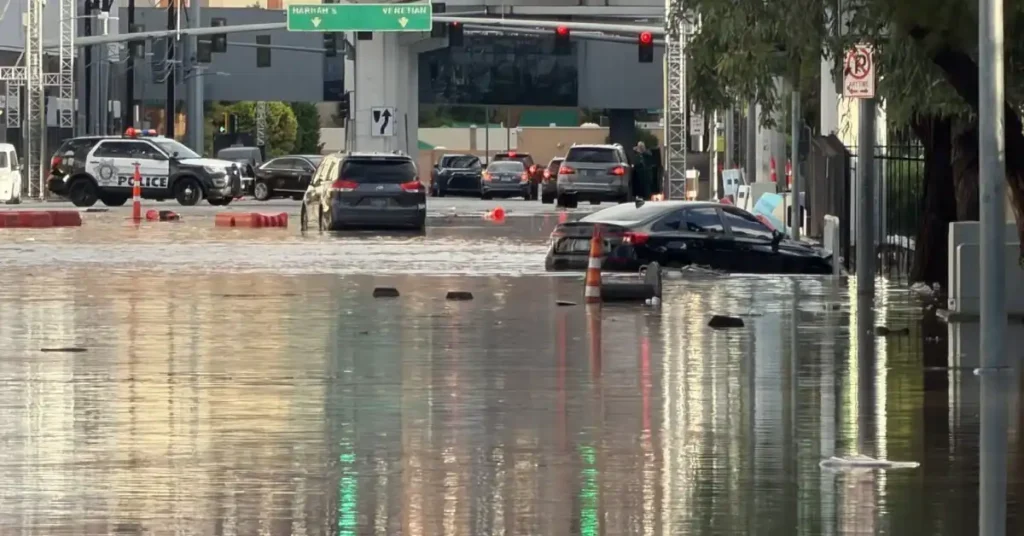
- Flooding: Roads and storm channels near the Strip experienced fast-moving water, mud, and debris.
- Road Closures: Koval Lane and Winnick Avenue were among roads temporarily closed before reopening.
- Weather Alerts: A Flood Watch and Wind Advisory remained in effect until early Monday, October 12.
- Monday Forecast: Scattered showers remain possible, with temperatures around the low 70s.
Las Vegas is known for sunshine and dry desert weather, but October 2026 flooding in Las Vegas showed how quickly conditions can change when tropical moisture reaches Southern Nevada.
The remnants of Post-Tropical Cyclone Rachel brought widespread rain, thunderstorms, gusty winds, and localized flooding to the Las Vegas Valley over the weekend of October 10–11. Roads near the Strip temporarily closed, storm channels filled rapidly, and some parts of the northwest valley received considerably more rain than the official airport total.
For visitors currently in Las Vegas, conditions are improving, but scattered showers remain possible on Monday, October 12. Travelers should continue watching road conditions and avoid any flooded streets or washes.
Las Vegas Flooding October 2026 at a Glance
| Weather Detail | Latest Information |
|---|---|
| Main Storm System | Remnants of Post-Tropical Cyclone Rachel |
| Record Rainfall | 1.08 inches on October 11 |
| Previous Oct. 11 Record | 0.78 inches in 2012 |
| Most Affected Areas | Low-lying roads, washes and drainage channels |
| Road Issues | Temporary closures, mud and debris |
| Monday High | Around 71–72°F |
| Monday Rain Chance | Scattered showers possible |
| Main Safety Risk | Driving through flooded roads |
The National Weather Service’s official climate report confirmed 1.08 inches of precipitation for October 11, making it a new daily rainfall record.
What Caused the Las Vegas Flooding?
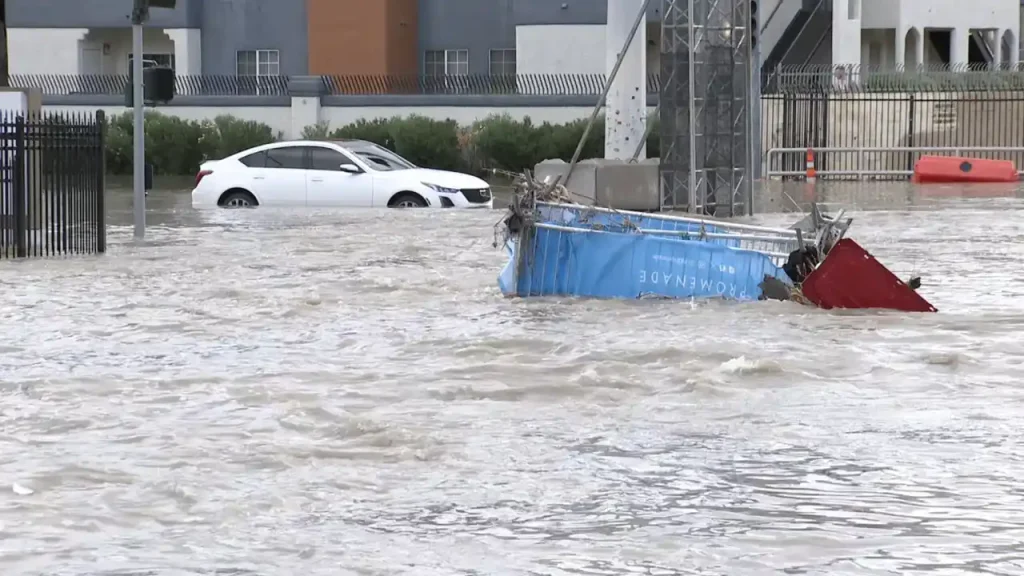
The unusual weather was connected to the remnants of Tropical Storm Rachel, which moved rapidly north from Baja California into the southwestern United States.
By Sunday morning, Rachel had weakened into a post-tropical system, but it was still carrying significant tropical moisture into Southern Nevada.
The National Hurricane Center reported that the remnants were bringing heavy rain and gusty winds across the Southwest as the system moved through the region.
That moisture combined with thunderstorms over the Las Vegas Valley, producing heavy rainfall in a relatively short period.
Desert cities are particularly vulnerable to flash flooding because intense rainfall can quickly run into streets, washes, and flood-control channels instead of gradually soaking into the ground.
Las Vegas Breaks Daily Rainfall Record
October 11 became an unusually wet day for Las Vegas.
The official National Weather Service climate report recorded 1.08 inches of rain, easily surpassing the normal daily rainfall of only around 0.01 inches.
The previous record for October 11 was 0.78 inches set in 2012.
That is an important correction to reports claiming the previous record dated back to 1947.
Temperatures were also much cooler than normal. Las Vegas reached only 73°F on Sunday, compared with a normal October 11 high around 83°F.
Rain totals varied significantly across the valley. Some gauges in northwest Las Vegas received more than two inches as stronger bands moved through the area.
Flooding Near the Las Vegas Strip
Some of the most noticeable flooding occurred just east of the Strip.
Fast-moving water filled storm channels behind The LINQ and near the Virgin Hotels area. Videos from the area showed large amounts of runoff moving through drainage infrastructure.
This can look alarming, but Las Vegas has an extensive network of flood-control channels designed to move water away from developed areas during heavy storms.
Flooding also affected nearby streets.
Koval Lane and Winnick Avenue were temporarily closed because of water, mud, and debris. Crews later cleaned the area and reopened the roads.
Visitors should therefore avoid assuming that viral videos showing rushing water mean the entire Las Vegas Strip is underwater.
Flooding can be highly localized, with one intersection experiencing significant water while nearby streets remain passable.
Are Las Vegas Roads Still Closed?
Conditions improved considerably after Sunday’s heaviest rainfall.
Roads including Koval Lane and Winnick Avenue that had been affected by flooding were reported reopened after crews cleared debris.
However, conditions can change quickly if another thunderstorm develops.
Low-lying intersections, washes, drainage channels, underpasses, and streets with poor drainage are the areas most likely to experience renewed problems.
Do not use standing water as a shortcut simply because another vehicle appears to have crossed successfully.
Flood Watch and Weather Alerts
A Flood Watch and Wind Advisory remained in effect until 5:00 AM PDT on Monday, October 12 for Las Vegas.
This is another important update from the original reports that suggested the Flood Watch would continue until Monday evening.
The National Weather Service forecast scattered showers and thunderstorms through part of Monday, followed by improving conditions later in the day.
Monday’s high is expected to reach around 71–72°F, with winds considerably less intense than during the main storm period.
What Visitors Should Expect Monday
Las Vegas remains open, and this is not a situation where the entire Strip has shut down.
Visitors should instead expect localized disruptions.
Some streets may contain mud or debris left behind by floodwater. Traffic may also slow considerably if another heavy shower passes over the Strip.
Outdoor plans could be affected by scattered rain, but indoor attractions, casinos, restaurants, shopping centers, shows, and most major resort operations provide plenty of alternatives.
If you are planning an outdoor attraction, hiking trip, or drive outside the city, weather conditions deserve extra attention because desert washes can remain dangerous even when rain is falling somewhere farther away.
Flash Flood Safety in Las Vegas
The most important rule during desert flooding is simple: never drive into a flooded roadway.
Water depth can be difficult to judge, particularly at night.
The National Weather Service warns drivers to turn around when encountering flooded roads because low-water crossings can become dangerous very quickly.
If you encounter standing or moving water:
- Turn around and use another route.
- Stay away from washes and drainage channels.
- Never walk through fast-moving floodwater.
- Follow barricades and road-closure signs.
- Allow additional travel time.
- Check your flight status before leaving for the airport.
A road that looks safe can have damaged pavement underneath the water.
Will Harry Reid Airport Be Affected?
Heavy rain and thunderstorms can cause temporary flight delays, particularly when lightning or strong winds affect ground operations.
However, travelers should not assume their flight is delayed simply because flooding occurred elsewhere in Las Vegas.
Check your airline’s current flight status before leaving your hotel.
Allow additional time for the trip to Harry Reid International Airport if rain returns because surface-road traffic around the Strip and airport can slow quickly.
Is It Safe to Visit Las Vegas Right Now?
For most visitors, yes.
The main period of heavy rainfall occurred Sunday, and conditions were improving by Monday morning.
The National Weather Service forecast scattered showers before conditions become mostly sunny later Monday, with a high around 72°F.
The biggest remaining concern is localized flooding if another heavy shower develops.
There is no reason to cancel a Las Vegas trip solely because of the flooding, but visitors should remain flexible with outdoor plans and avoid flooded areas.
Conclusion
The Las Vegas flooding in October 2026 followed an unusually heavy round of tropical rainfall from the remnants of Rachel. Las Vegas officially recorded 1.08 inches of rain on October 11, setting a new daily record and causing localized road flooding, fast-moving storm channels, mud, and temporary closures.
Conditions are now improving, but scattered showers remain possible. If you are visiting Las Vegas, keep your plans flexible, allow extra travel time, and never attempt to drive or walk through floodwater.
FAQ
How much rain did Las Vegas receive on October 11?
The official Las Vegas climate station recorded 1.08 inches, setting a daily rainfall record.
What caused the flooding?
The flooding was connected to tropical moisture from the remnants of Post-Tropical Cyclone Rachel.
Did the Las Vegas Strip flood?
There was localized flooding on roads and in storm channels near the Strip, but the entire Las Vegas Strip was not flooded.
Were roads closed?
Yes. Koval Lane and Winnick Avenue were among roads temporarily closed before crews reopened them.
Is more rain expected?
Scattered showers remain possible Monday before conditions improve.
Keep Reading: