Key Highlights:
- The Oasis Origin: Founded in 1905 as a railroad town, Las Vegas grew around natural springs in the Mojave Desert. The valley’s name comes from Spanish for “The Meadows.”
- The 1931 Turning Point: Nevada legalized gambling while construction began on Hoover Dam, bringing thousands of workers and new money to the region.
- The Mob to Corporate Shift: Figures such as Bugsy Siegel helped establish the early Strip, while Howard Hughes and later corporate developers helped move Las Vegas into a new era.
- The Modern Capital: Today’s Las Vegas has grown far beyond gambling, becoming a global destination for sports, dining, entertainment, conventions, and immersive attractions such as Sphere.
Standing at the intersection of Las Vegas Boulevard and Flamingo Road, surrounded by massive resorts and glowing neon signs, it is difficult to imagine that much of this area was once empty desert.
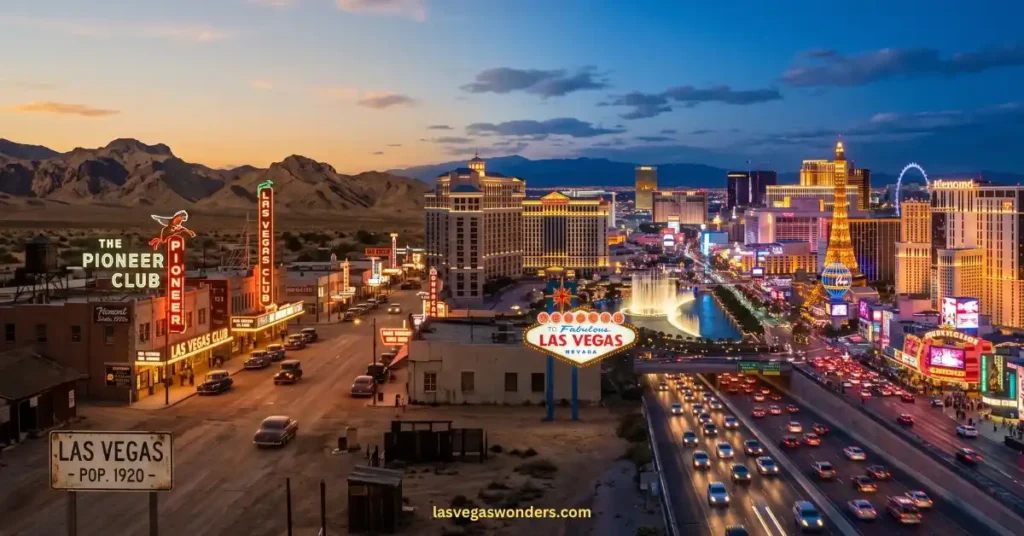
Las Vegas has undergone one of the most dramatic transformations in American history. What began as a desert oasis and railroad stop eventually became a gambling destination, a playground for Hollywood stars, a center of organized-crime history, and finally one of the world’s most recognizable entertainment capitals.
Understanding that history adds another layer to a visit. The neon signs, historic casinos, and famous resorts all have stories behind them. Here’s how Las Vegas grew from a small desert settlement into the city known around the world as Sin City.
The Master Timeline: Las Vegas Through the Decades
| Era & Milestone | Key Historical Developments | Iconic Venues & Landmarks | Major Historical Figures |
|---|---|---|---|
| 1829–1905: Desert Oasis & Railroad Town | Spanish explorers encounter the valley; railroad development creates a new town | Old Las Vegas Mormon Fort, railroad depot | Rafael Rivera, William Andrews Clark |
| 1931–1940: Gambling & Hoover Dam Boom | Nevada legalizes gambling; Hoover Dam construction brings thousands of workers | Golden Gate, Fremont Street | Nevada lawmakers, Hoover Dam workers |
| 1940s–1960s: The Mob & Rat Pack Era | Resorts expand along the Strip and organized crime helps finance casino development | Flamingo, Sands, Sahara | Bugsy Siegel, Meyer Lansky, Frank Sinatra |
| 1960s–1980s: Corporate Transformation | Corporate ownership grows while mob influence declines | Caesars Palace, International Hotel | Howard Hughes, Kirk Kerkorian |
| 1989–Present: Mega-Resort & Sports Era | Themed resorts, entertainment, sports, and technology reshape the city | Mirage, Bellagio, Allegiant Stadium, Sphere | Steve Wynn and modern resort developers |
1. From Desert Springs to Railroad Town (1829–1905)
Long before casinos and neon signs, the Las Vegas Valley was home to the Southern Paiute people, who understood how to survive in the harsh Mojave Desert environment.
In 1829, Spanish scout Rafael Rivera traveled through the valley as part of an expedition along the Old Spanish Trail. The area contained lush vegetation around its natural springs, leading to the name Las Vegas, meaning “The Meadows” in Spanish.
A Mormon settlement was later established in the area, and the Old Las Vegas Mormon Fort was built in 1855.
The city’s modern history took a major turn on May 15, 1905, when land near the railroad tracks was auctioned. The sale of approximately 110 acres helped establish the foundation of what became Downtown Las Vegas.
The railroad connected Las Vegas with important cities across the Southwest, turning the small settlement into a growing transportation and commercial center.
Historical fact: The Golden Gate Hotel & Casino traces its history to 1906, when it opened as the Hotel Nevada. It remains one of the oldest casino properties in Las Vegas.
2. The 1931 Turning Point: Gambling and Hoover Dam
Two major developments in 1931 dramatically changed Las Vegas.
Nevada legalized gambling: Facing economic difficulties during the Great Depression, Nevada lawmakers legalized casino gambling in an effort to increase tax revenue and stimulate the economy.
Hoover Dam construction began: The massive construction project on the Colorado River brought thousands of workers to Southern Nevada.
The nearby company town of Boulder City had strict rules against gambling and alcohol. As a result, many workers traveled to Las Vegas during their free time, spending money along Fremont Street.
Downtown Las Vegas began developing its reputation as an entertainment district. Neon signs, casinos, restaurants, and hotels transformed Fremont Street into what became known as Glitter Gulch.
3. The Mob Era and the Birth of the Las Vegas Strip
While Downtown Las Vegas continued to grow, developers began looking south along Highway 91, the road that would eventually become Las Vegas Boulevard.
The location offered large amounts of open land outside the city’s original downtown core. This allowed developers to build larger resorts with swimming pools, restaurants, entertainment venues, and expansive casino floors.
In 1941, El Rancho Vegas opened and became the first resort on what would become the Las Vegas Strip.
Then came the flamingo.
Thomas “Bugsy” Siegel became one of the most famous figures in early Las Vegas history after becoming involved with the development of the Flamingo, which opened in December 1946. The property introduced a more glamorous resort experience influenced by Hollywood.
The 1950s brought even more iconic properties, including the Sands, Sahara, Riviera, and Dunes.
Las Vegas also became closely connected with the entertainment industry. The Rat Pack, including Frank Sinatra, Dean Martin, Sammy Davis Jr., Peter Lawford, and Joey Bishop, helped turn the city into an international symbol of nightlife and celebrity culture.
4. Howard Hughes and the Corporate Transformation
By the 1960s, Las Vegas was beginning to move away from its early mob-dominated image.
Billionaire Howard Hughes arrived in Las Vegas in 1966 and famously stayed at the Desert Inn. After a dispute over his extended stay, Hughes eventually purchased the property.
He went on to acquire interests in several other Las Vegas properties.
Hughes’ involvement helped bring greater corporate attention and legitimacy to the casino industry. Changes to Nevada gaming laws also made it easier for publicly traded corporations to enter the casino business.
This helped establish the foundation for the corporate Las Vegas that followed.
5. The Mega-Resort Revolution
Las Vegas entered another major chapter in 1989, when Steve Wynn opened The Mirage.
The resort was unlike the traditional casinos that dominated the city. It featured a tropical theme, a large volcano attraction, luxury restaurants, entertainment, and high-end accommodations.
The Mirage demonstrated that Las Vegas could make money from much more than gambling.
The mega-resort era quickly followed:
- 1993: Treasure Island, Luxor, and the new MGM Grand expand the Strip.
- 1998: Bellagio opens with its famous fountains and luxury-focused design.
- 1999: Paris Las Vegas and The Venetian add European-inspired themes.
- 2000s: Shopping, restaurants, nightlife, conventions, and entertainment become major parts of the Las Vegas economy.
- 2010s–2020s: Professional sports and large-scale technology-driven entertainment reshape the city’s identity.
Today, Las Vegas is home to major professional sports teams, Formula 1 racing, world-class restaurants, massive concerts, and immersive attractions such as Sphere.
Where to Experience Historic Las Vegas Today
You don’t have to read a history book to experience old Las Vegas. Several attractions allow visitors to see the city’s past firsthand.
The Mob Museum: Located Downtown, this interactive museum explores the history of organized crime and law enforcement in America, with a strong focus on Las Vegas.
The Neon Museum: The famous Neon Boneyard preserves historic signs from former Las Vegas casinos and businesses, providing a colorful look at the city’s visual history.
El Cortez Hotel & Casino: Opened in 1941, this historic Downtown property remains an operating casino and is listed on the National Register of Historic Places.
Old Las Vegas Mormon Fort State Historic Park: This site preserves the remains of the 1855 adobe fort and offers a look at Las Vegas before the Strip existed.
The Takeaway: Understanding the City Behind the Neon
Las Vegas has reinvented itself many times, growing from a desert settlement and railroad town into a gambling destination, mega-resort capital, and global sports and entertainment hub.
The next time you walk along Fremont Street or the Strip, look beyond the neon. Historic casinos, preserved signs, museums, and landmarks show how the city became one of the world’s most famous destinations.
Our Final Helpful Tip: Visit the Mob Museum and Neon Museum, then walk through historic Fremont Street to experience Las Vegas history in one downtown outing.
❓ FAQ: Las Vegas History
Why is Las Vegas called “Sin City”?
The nickname is linked to Las Vegas’ long history of gambling, nightlife, drinking, and adult entertainment. The city’s reputation developed during the early 20th century and became closely associated with its casino culture.
What is the oldest casino in Las Vegas?
The Golden Gate traces its history to 1906, when it opened as the Hotel Nevada in Downtown Las Vegas.
Is the Flamingo the oldest casino on the Strip?
The Flamingo opened in 1946 and is one of the oldest surviving resort names on the Strip. However, its buildings and operations have changed significantly over the decades.
Did nuclear tests really take place near Las Vegas?
Yes. Atmospheric nuclear tests were conducted at the Nevada Test Site, northwest of Las Vegas, during the 1950s and early 1960s. The tests became part of the city’s unusual tourism culture, with some hotels promoting “atomic” viewing parties.
Keep Reading: