
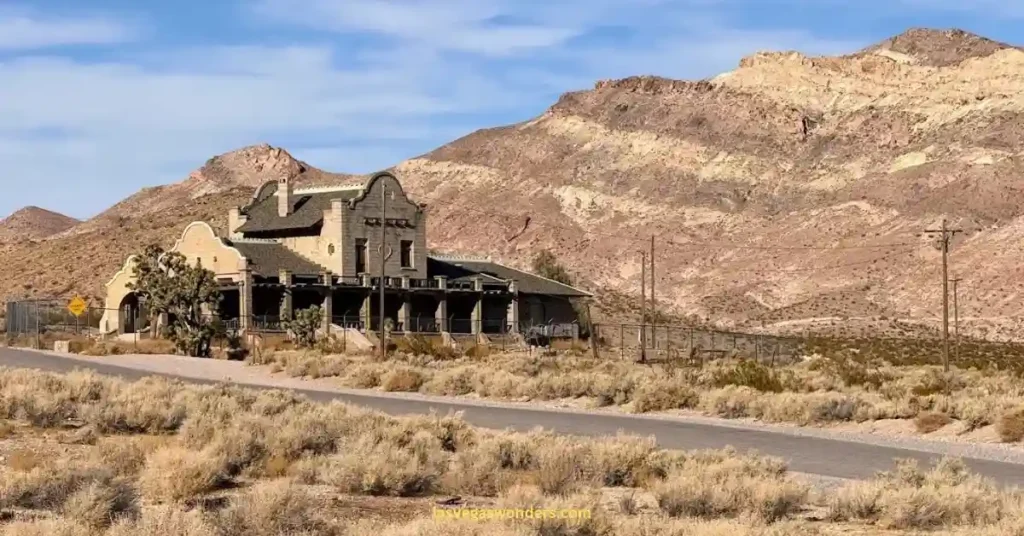
Key Highlights:
- Location: Approximately 120 miles northwest of Las Vegas, near Beatty and Death Valley National Park.
- Driving Time: Around two hours from the Las Vegas Strip.
- Top Attractions: Cook Bank ruins, Tom Kelly’s Bottle House, historic railroad depot, and Goldwell Open Air Museum.
- Entrance Fee: Free admission and parking.
- Opening Hours: Open daily from sunrise to sunset for day-use visitors.
- Best Time to Visit: October through April offers cooler temperatures for exploring the ruins.
- Travel Tip: Bring water, wear comfortable shoes, and stay outside fenced historic structures.
Rhyolite Ghost Town is one of Nevada’s best-preserved mining ghost town sites, located approximately 120 miles northwest of Las Vegas. Established during the early 1900s gold rush, Rhyolite quickly developed into a busy community with banks, hotels, railroads, and thousands of residents before collapsing within a few years.
Today, visitors can see the remains of the Cook Bank Building, Tom Kelly’s Bottle House, the historic railroad depot, and unusual sculptures at the nearby Goldwell Open Air Museum. The site is free to visit and accessible by paved roads, making it an easy day trip from Las Vegas or a stop on the way to Death Valley.
Rhyolite Ghost Town: Quick Information
| Detail | Information |
|---|---|
| Location | Near Beatty, Nevada |
| Distance From Las Vegas | Approximately 120 Miles |
| Driving Time | Around 2 Hours |
| Entrance Fee | Free |
| Opening Hours | Sunrise to Sunset |
| Best Months | October–April |
| Recommended Visit | 1–2 Hours |
| Managing Agency | Bureau of Land Management |
How to Get to Rhyolite From Las Vegas
Rhyolite is located approximately four miles west of Beatty, Nevada, near the eastern side of Death Valley National Park.
The easiest route from Las Vegas follows US-95 North toward Beatty.
From Beatty, take NV-374 West and follow signs for the Rhyolite Historic Area.
The main access road is paved, making the site accessible to most standard rental cars.
There is no regular public transportation to the ghost town, so renting a car or booking a guided tour is the most practical option.
History of Rhyolite Ghost Town
Rhyolite developed after gold was discovered in the nearby Bullfrog Hills in 1904.
The town expanded rapidly, attracting miners, investors, merchants, and families hoping to benefit from the gold rush.
By 1907, Rhyolite had electricity, water systems, hotels, banks, newspapers, and railroad connections.
Population estimates vary, but historians generally place its peak population at several thousand residents.
However, the financial panic of 1907 reduced investment in mining operations.
As mines became less profitable, businesses closed and residents moved elsewhere.
By 1920, only 14 people remained.
Today, the surviving buildings provide a glimpse into Nevada’s short-lived mining boom.
Best Things to See at Rhyolite Ghost Town
1. Cook Bank Building
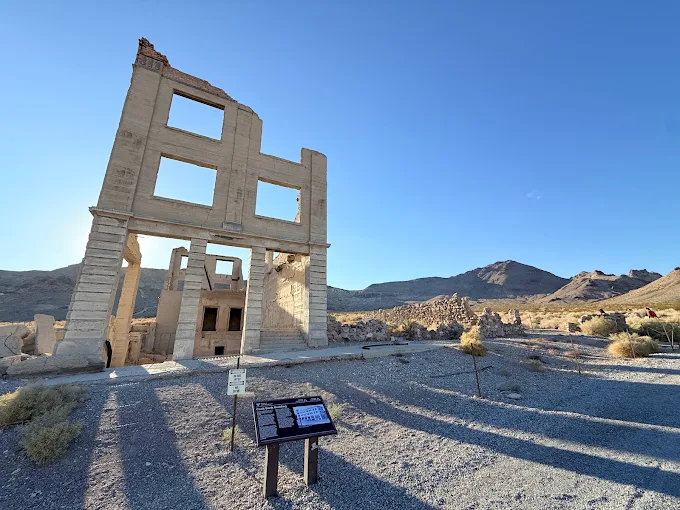
The Cook Bank Building is Rhyolite’s most recognizable historic structure.
Originally built as a three-story bank, it featured expensive materials and impressive architecture for a remote mining town.
Today, only portions of the walls remain.
The large window openings and surrounding desert mountains make it one of the most photographed ruins in Nevada.
Visitors can photograph the building from outside its protective fencing.
2. Tom Kelly’s Bottle House
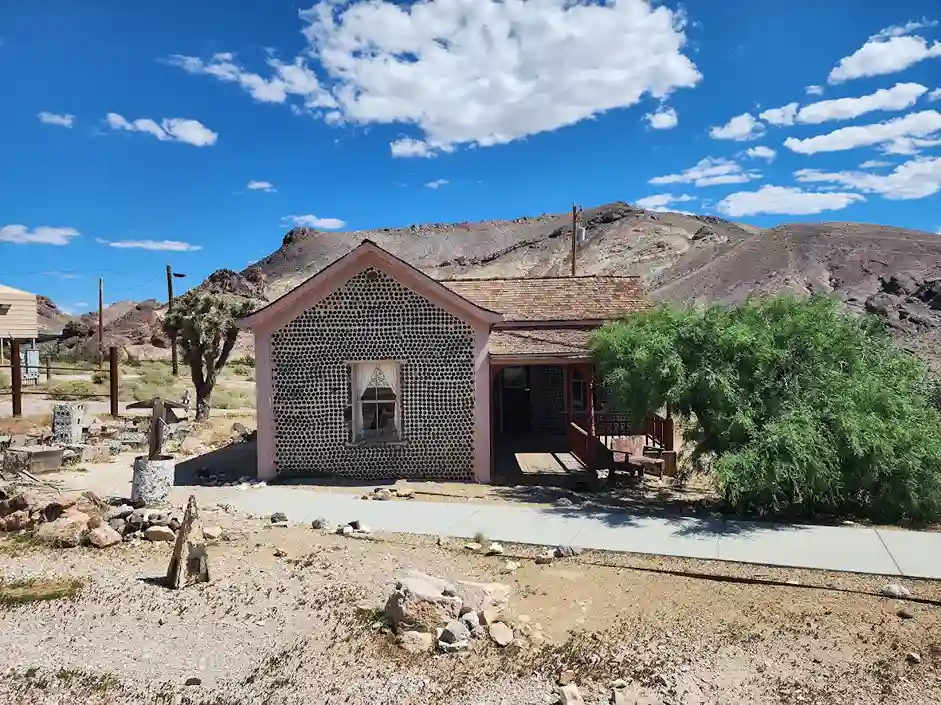
Tom Kelly’s Bottle House is another famous attraction in Rhyolite.
Built in 1905–1906, the house contains approximately 50,000 discarded glass bottles.
Using bottles helped reduce construction costs when traditional building materials were expensive to transport.
The structure was later restored and remains one of the best-known bottle houses in the United States.
Visitors can view its exterior, but the house is protected by fencing.
3. Rhyolite Railroad Depot
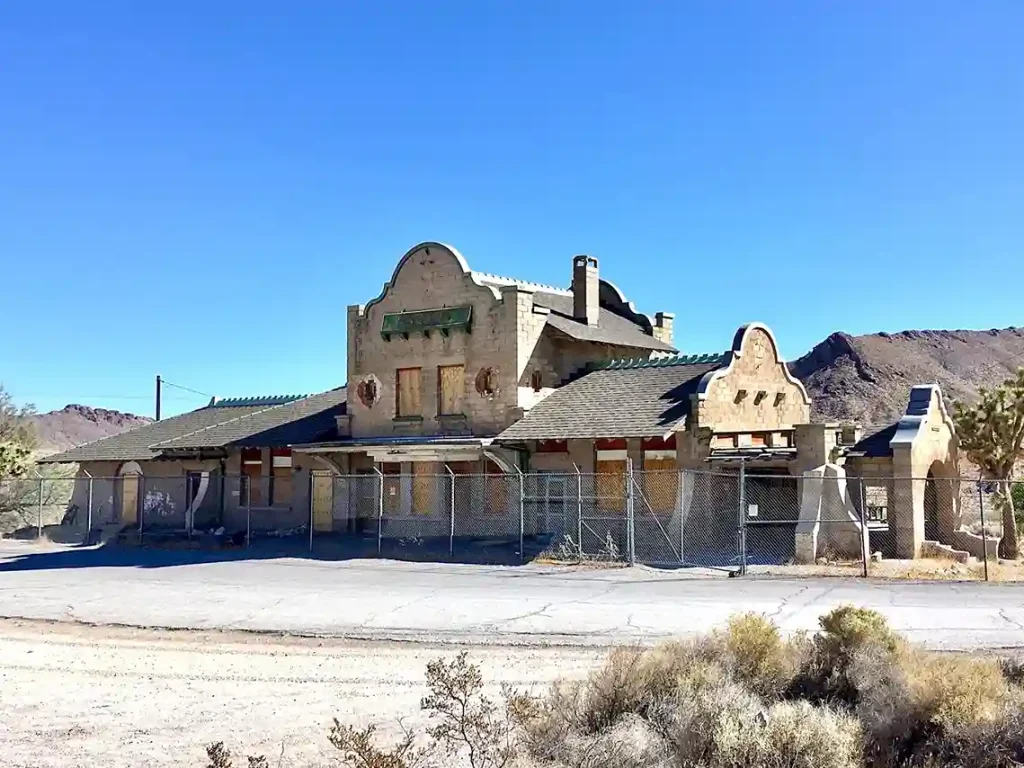
The former Las Vegas and Tonopah Railroad Depot is among the most complete historic buildings remaining in Rhyolite.
Its distinctive architectural design reflects the town’s ambitious development during the gold rush.
The depot continued serving different purposes after mining activity declined.
Today, visitors can photograph the building from outside.
The structure is privately owned, and public entry is restricted.
4. Porter Brothers General Store
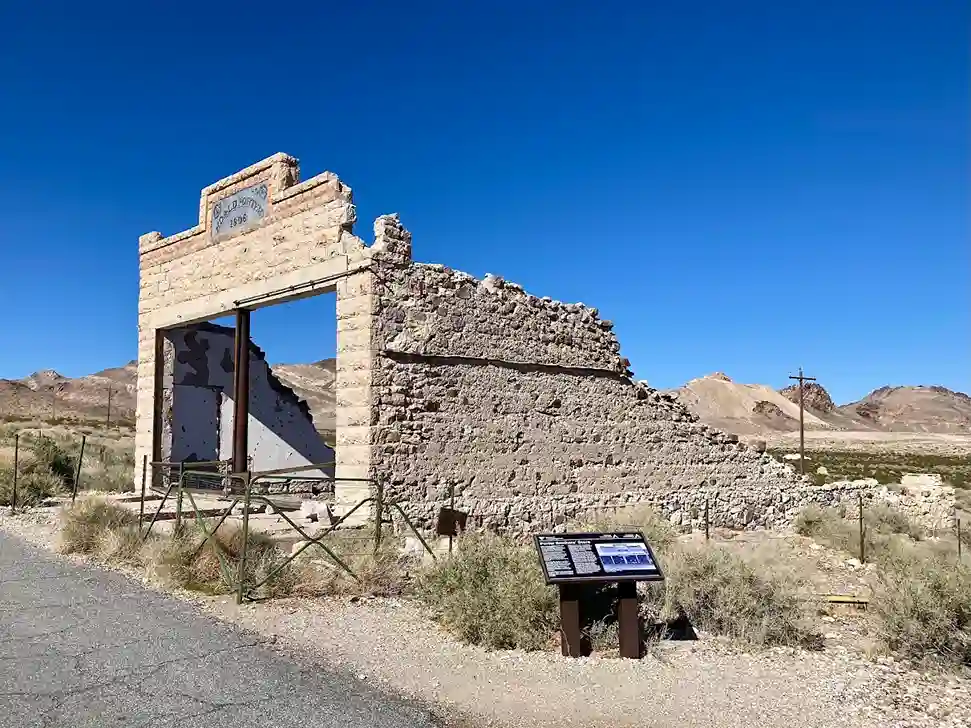
The Porter Brothers General Store once supplied residents with groceries, clothing, and other everyday goods.
Its remaining walls and large window openings help visitors understand how the town’s commercial district originally looked.
The ruins are located near other historic buildings, making them convenient to photograph during a walking visit.
Goldwell Open Air Museum
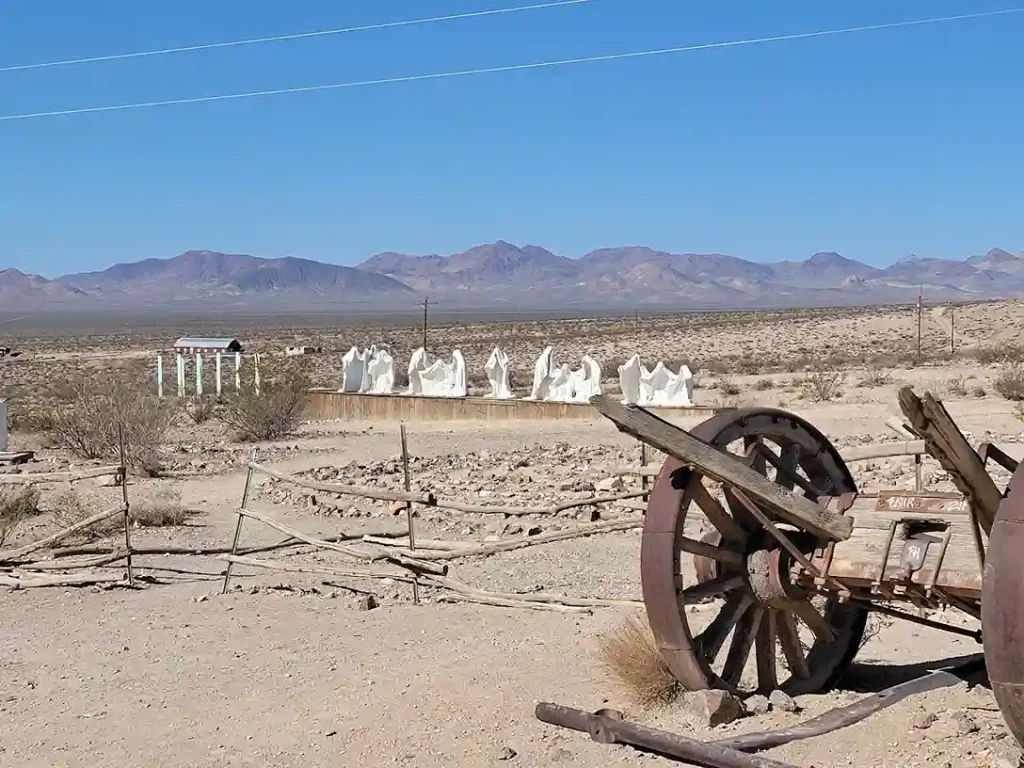
Located beside Rhyolite, the Goldwell Open Air Museum features unusual outdoor sculptures surrounded by the Nevada desert.
The museum’s best-known artwork is The Last Supper, created by Belgian artist Albert Szukalski in 1984.
The installation features ghostlike figures inspired by Leonardo da Vinci’s famous painting.
Other notable sculptures include:
- Lady Desert: The Venus of Nevada: A large pink sculpture resembling pixelated computer graphics.
- Ghost Rider: A ghostlike figure riding a bicycle.
- Tribute to Shorty Harris: A sculpture honoring one of the region’s early gold prospectors.
The outdoor museum is free to visit, although donations help support preservation and maintenance.
Best Time to Visit Rhyolite
| Season | What to Expect |
|---|---|
| Spring | Mild Weather and Good Photography |
| Summer | Extreme Heat and Limited Shade |
| Fall | Comfortable Sightseeing Temperatures |
| Winter | Cooler Days and Cold Mornings |
October through April is generally the most comfortable period for visiting.
Early morning and late afternoon provide attractive lighting for photographing the ruins.
Summer visitors should avoid extended walks during the hottest hours.
Tips for Visiting Rhyolite Ghost Town
- Bring Drinking Water: There are no reliable food or drinking-water services at the ruins.
- Fill Up in Beatty: The nearby town has gas stations, restaurants, and convenience stores.
- Download Offline Maps: Mobile reception can be unreliable outside populated areas.
- Respect Historic Structures: Never climb ruins, enter fenced buildings, or remove artifacts.
- Wear Comfortable Shoes: The historic area includes dirt, gravel, and uneven ground.
- Visit During Daylight: The Bureau of Land Management designates Rhyolite as a day-use area.
For official visitor information, check the Bureau of Land Management Rhyolite Historic Area.
Can You Visit Rhyolite and Death Valley in One Day?
Yes. Rhyolite is approximately 35 miles from Death Valley’s Furnace Creek Visitor Center.
Visitors can combine the ghost town with selected Death Valley attractions during a full-day road trip.
However, driving between locations takes considerable time.
If visiting both destinations, leave Las Vegas early and prioritize a few attractions rather than attempting to see the entire national park.
Conclusion
Rhyolite Ghost Town offers an interesting look at Nevada’s gold rush history, with abandoned buildings, desert scenery, and unique outdoor artwork. Visitors can photograph the Cook Bank ruins, see Tom Kelly’s Bottle House, and explore the Goldwell Open Air Museum without paying an entrance fee. Its location near Beatty also makes it a convenient stop on a Death Valley road trip. Plan to spend one to two hours exploring, bring water, and visit during cooler weather for the most comfortable experience.
Frequently Asked Questions
How far is Rhyolite Ghost Town from Las Vegas?
Rhyolite is approximately 120 miles northwest of Las Vegas. The drive usually takes around two hours.
Is Rhyolite Ghost Town free to visit?
Yes. Rhyolite Historic Area does not charge admission or parking fees.
What are the opening hours for Rhyolite?
Rhyolite is open daily from sunrise to sunset. Overnight camping is not permitted within the historic area.
Can you walk inside the abandoned buildings?
No. Many historic structures are fenced or unsafe to enter. Visitors should remain in permitted public areas.
Is Rhyolite Ghost Town worth visiting?
Yes. Rhyolite is one of Nevada’s best-known ghost towns and features historic ruins, unique architecture, and the nearby Goldwell Open Air Museum.
How much time do you need at Rhyolite?
Most visitors can explore the main ruins and nearby sculptures in approximately one to two hours.
Can you drive to Rhyolite in a regular car?
Yes. The main access road is paved and generally suitable for standard passenger vehicles.
Keep Reading:
- Death Valley National Park from Las Vegas: Distance, Drive & Things to Do
- Mount Charleston, Nevada: Best Things to Do & Day Trip From Las Vegas
- Boulder City, Nevada: Best Things to Do & Day Trip From Las Vegas
- Las Vegas to Zion National Park: Best Routes, Drive Time & Distance
- Floyd Lamb Park Las Vegas: Hours, Fees & Things to Do